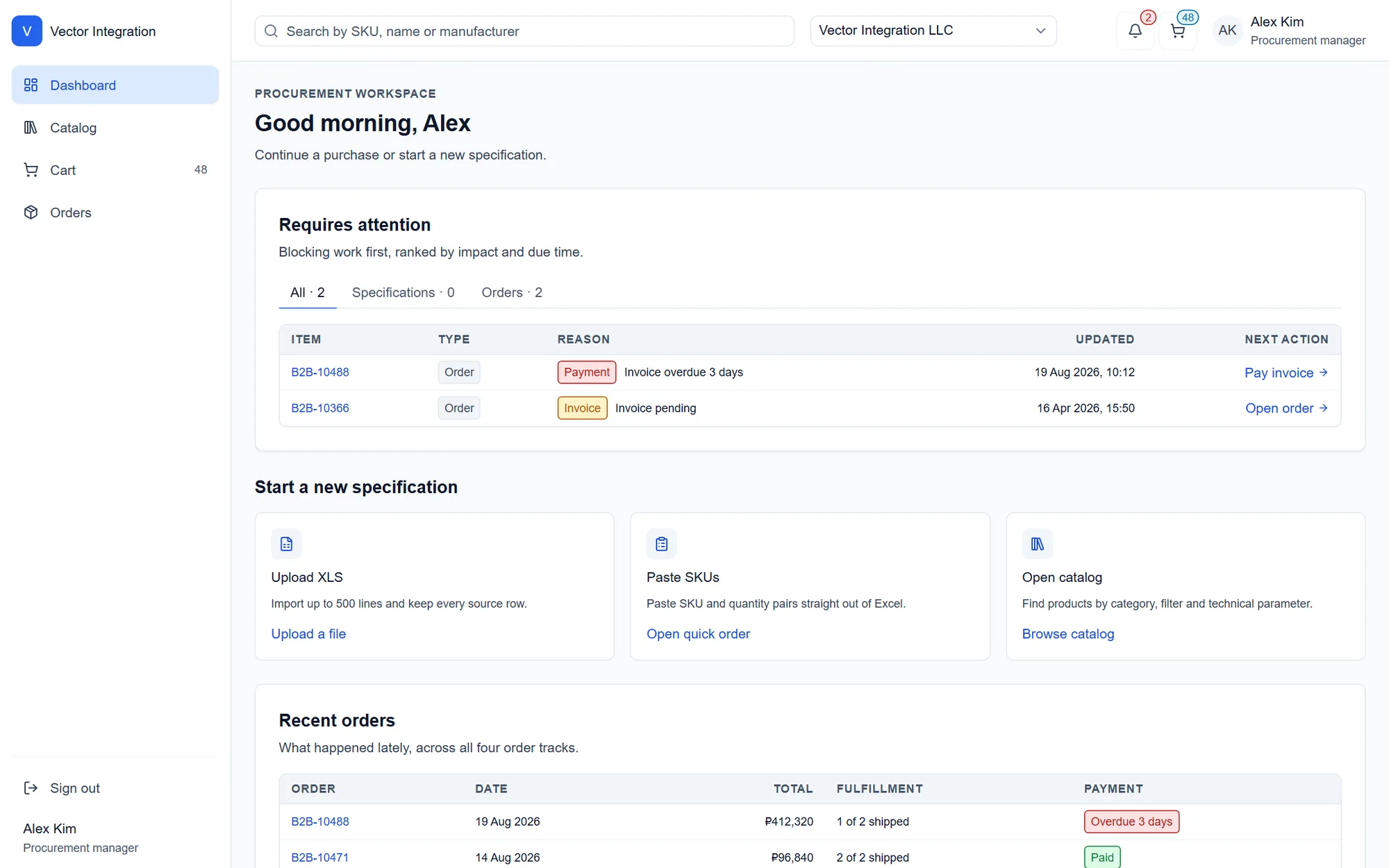
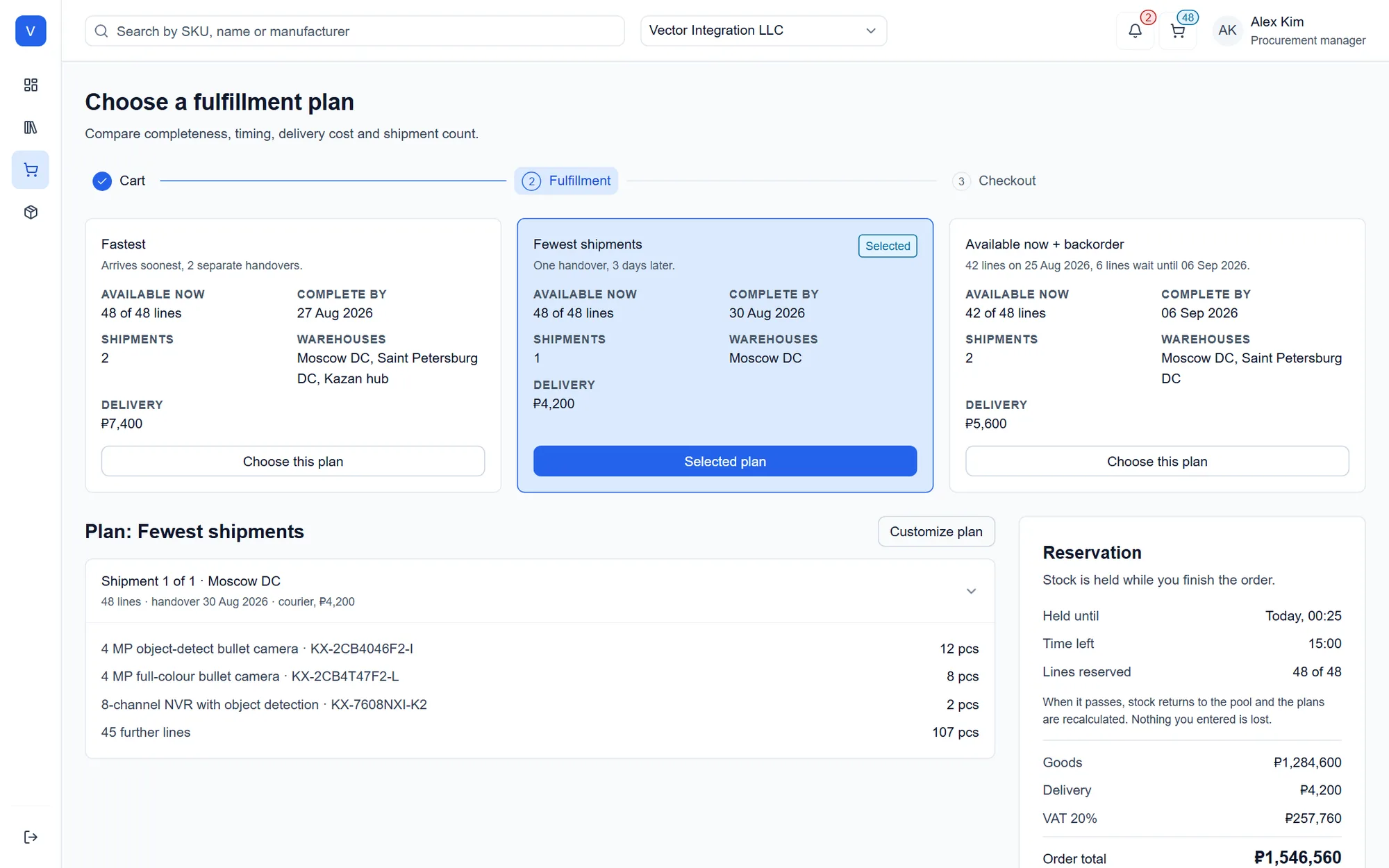
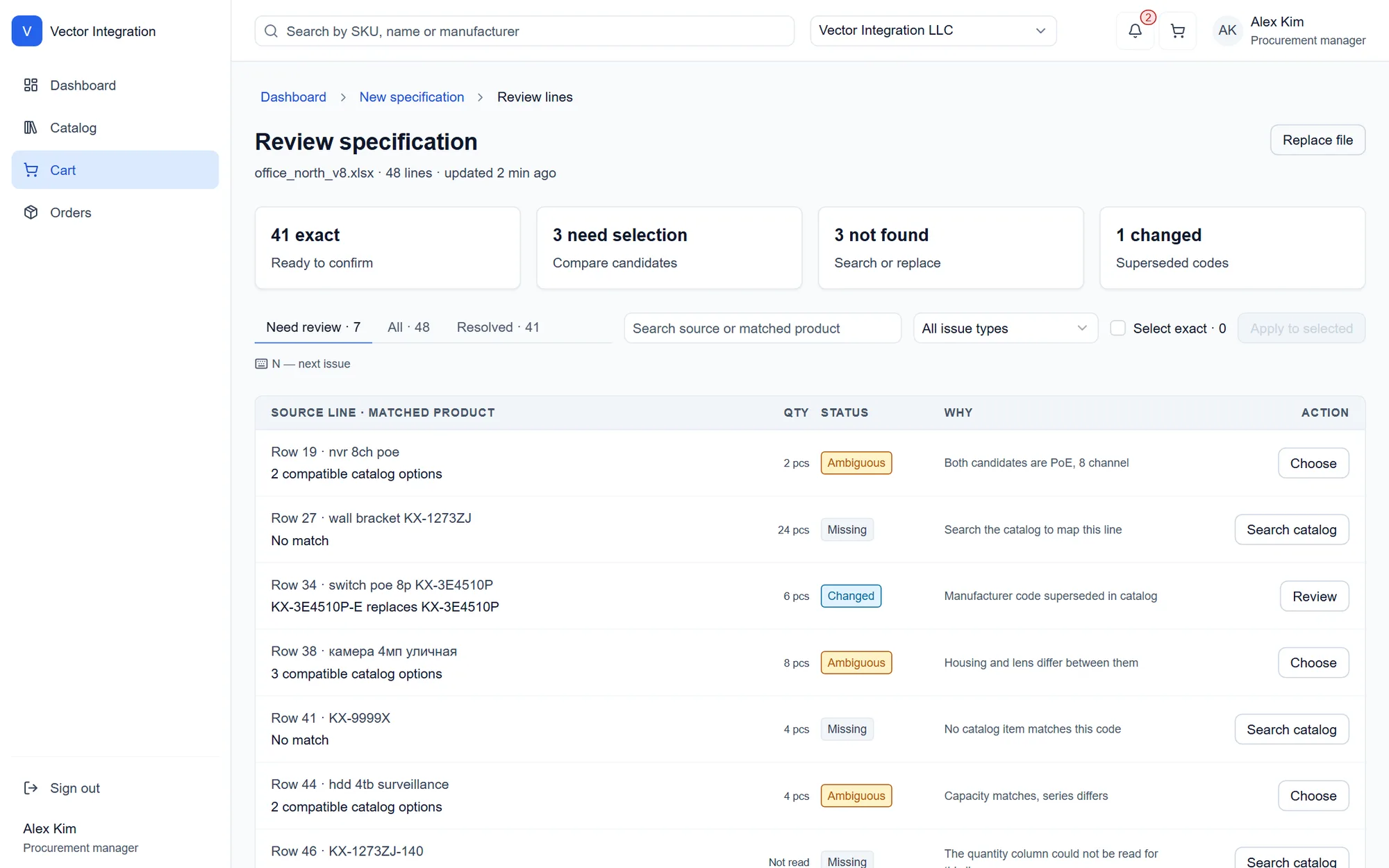
The only hard evidence I had was the old product, so that is where I started: ten screens, one cognitive walkthrough each, four questions per step — goal, discoverability, mapping, feedback — and a severity scale that keeps “blocks the flow” apart from “looks untidy”. Where a static screen could not prove something, such as keyboard order or what happens after a click, I recorded it as not confirmed rather than counting it as a defect.
From there: a brief that keeps what is known about the old product separate from what is a target assumption, and never lets the second quietly become the first. Scenario work across the real buying shapes — a five-line reorder, a fifty-line project, a two-hundred-line import. A market pass over sixteen comparable screens, each recorded as adopt, adapt or reject with its reason, so a pattern rejected once does not come back merely because it surfaced in search again.
Then the design system, then twenty screens, then the implementation in React with a component catalogue on top of it. The last step was a synthetic run: an agent walking nine scenarios through the built prototype, thirty-five runs across three rounds, recorded as real test runs with their own events. That step is what found the things the screens were still missing.